Wednesday, October 18, 2023

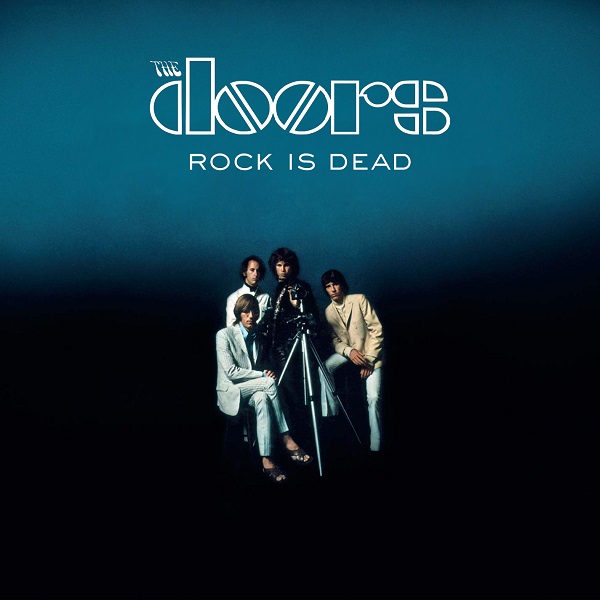
The Doors - Rock is Dead


The Doors - Rock is Dead

(soniclovenoize reimagining)

Side A:

  1. Touch Me
  2. Who Scared You
  3. Shaman’s Blues
  4. Whiskey, Mystics & Men
  5. Queen of The Highway
  6. Do It

Side B:

  1. Rock is Dead

Hello there, and welcome to the new Patreon-based incarnation of Albums That Never Were!  The very first reconstruction to be featured in this new format is a reimagining of The Doors fourth album, here called Rock is Dead.  This reimagining attempts to restructure the band’s otherwise dismal 1969 album The Soft Parade into a release more in-line with the band’s established Morrison-led, psychedelic-rock sound, rather than an over-produced hodge-podge of unfinished material.  Side A features what is essentially the best material from The Soft Parade sessions, and are all “band only mixes” that exclude producer Paul Rothchild’s misguided brass and string overdubs. The entirety of Side B consists of my own, custom made 20-minute edit of The Door’s infamous hour-long jam “Rock is Dead”, intended as this album’s epic (as “The End”, “When The Music’s Over” and “Celebration of The Lizard” were for the previous three albums).

By 1969, the creative minds behind The Doors were running on empty.  After two groundbreaking 1967 albums The Doors and Strange Days and a third entry with 1968’s Waiting For The Sun (which was reconstructed on this blog as Celebration of the Lizard), The Doors were simply out of original material to create a fourth album.  With the daunting task of writing completely new material in the studio for a market hungry for new Doors material, the band relied heavily on contributions from guitarist Robby Kreiger; although he had written the band’s break-through hit “Light My Fire”, the soul of the band lied within vocalist Jim Morrison’s words, coupled with the collective strength of the rest of the band’s idiosyncratic musicality.  Unfortunately, Morrison was completely disillusioned from “The Rock Star Life” and was more interested in his two other passions: alcohol and poetry.   Left to herd the cats was producer Paul Rothchild, tasked to coax out an album’s worth of material from a band adrift.  Additionally, Rothchild made the erroneous blunder to overdub lush horns and strings onto the new Doors material, to follow the symphonic rock trend paved by his perceived main competition, The Beatles.

The album sessions began in July 1968, directly after the completion of Waiting For The Sun, with the recording of Morrison’s “Wild Child” and Krieger’s “Wishful Sinful”, neither of which contained the excitement of the band’s previous work.  Also tracked was a demo of a song which would be revisited years later: “Roadhouse Blues”, featuring keyboardist Ray Manzerek on lead vocals!  The Doors then embarked on an infamous European tour with Jefferson Airplane (which included Morrison’s drunken tryst with Grace Slick, and Ray’s first foray into replacing the our-of-commission frontman of the band), returning to work on the album in November.

The first two new songs to be tracked at the band’s new Elektra Studios that Fall would be a pair of Krieger originals with decidedly pop overtones: “Touch Me” and “Tell All The People.”  While the former has potential, the later was a soupy ballad to flower power.  In contrast, Jim and Robby offered a pair of co-written rockers: “Do It” and “Who Scared You”.  Finally, Jim offered up his own material in “Shaman’s Blues”, “Queen of The Highway” and “Whiskey, Mystics and Men”; the latter two would be scrapped and later re-recorded for Morrison Hotel.  The following week, Rothschild overdubbed horns to “Touch Me”, “Tell All The People”, “Wishful Sinful” and “Who Scared You”, and strings to “Touch Me” and “Wishful Sinful.”

The excruciating recording process had yet to yield an albums-worth of material, so the band returned after Christmas to record Robby’s own bizarre tribute to Ottis Redding, “Runnin’ Blue”, which received hoedown overdubs after the New Year.  After attempting and then abandoning a “jazzier” remake version of “Queen of the Highway” (which was abandoned as well), the quartet proceeded to record a number of musical fragments, culled from the final bits of poetry from Morrison’s lyric book which had birthed so many Doors classics only three years earlier.  The resulting scatterbrained medley “The Soft Parade” would last nearly nine minutes in length, yet lacked the soul of The Doors’ previous epic album songs.

But the real curiosity of the sessions occurred on February 25th, 1969: an hour-long in-studio jam that has since been dubbed “Rock is Dead.”  Its infamy has only grown over the years, spawning an intense mythos often concerning an intentional overview of the entire history of Rock n Roll, The Doors self-awareness of their place in it all, and Jim’s alleged conclusion that Rock was dead.  Judging by what can actually be heard on the tape, it sounds more like a drunk Doors jamming to oldies for an hour, with varying levels of success.  Regardless, its legendary status in The Doors vault was secured as various edits and mixes of “Rock is Dead” scouted the bootleg market for years.

With teeth finally extracted, The Soft Parade was released in July 1969, with “Touch Me” hitting number three on the Billboard charts.  Whilst admittedly a great Doors song, this listener could not help but wonder “What would it have sounded like without the schlocky Las Vegas horns?”  Fifty years later, The Doors issued “band only” mixes of most of the overproduced Soft Parade songs–as well as the entirely of the “Rock is Dead” jam session–allowing fans to re-imagine the album into a more “traditional"-sounding Doors album, as well as a more Jim Morrison-centered one.

Side A of this Doors reimagining begins with the aforementioned band-only mix of “Touch Me”, which loses none of its bombast that some had presumed without the horn section.  Following is the band-only remix of “Who Scared You”, originally released with horns as the b-side to “Wishful Sinful”, followed by the original mix of “Shaman’s Blues.”  At this point, we shift to two Jim Morrison-led outtakes from The Soft Parade sessions that could have been finished and greatly improved the original album: “Whiskey, Mystics and Men” (here the original November 1968 outtake, rather than the re-recording which featured American Prayer-era band overdubs) adds the darkness and mysticism lacking on The Soft Parade; following is my own edit of the original November 1968 “Queen of The Highway” from the Morrison Hotel boxset (yes, the “Get naked and fuck!” version!) that effectively creates a cohesive version from four different sections and takes.  Side A ends with a bang with the original album mix of “Do It.”

Since Rock is Dead is meant to be closer in sound and tone to the debut, Strange Days and Celebration of The Lizard, the only way this album could be presented would be with an edit of “Rock is Dead” occupying the entire Side B of this reimagined album!  I have removed all the bum notes and false starts, the outhouse Robby solos and unnecessarily repeated musical sections to create a more cohesive performance.  This “Rock is Dead” ends up sounding like a more refined live improvisation, much like what one would hear at a Doors concert and something that was never really captured in the studio.  It might lack real meat, but it is honest; if you have never bothered listening to this piece, my edit is probably your best bet.  Some might construe it as rough and slightly meandering, but is that any worse than what we got on The Soft Parade?


Sources used:

Morrison Hotel (50th Anniversary boxset)

The Soft Parade (50th Anniversary boxset)


LISTEN TO IT AT OUR PATREON SITE

http://patreon.com/AlbumsThatNeverWere


Friday, October 13, 2023

Hey There...

Hey there. 


If I sell FIVE Albums That Never Were shirts, Then I'll post a new reconstruction this weekend.  


 https://www.etsy.com/shop/AlbumsThatNeverWere

Tuesday, July 4, 2023

Jefferson Airplane - Another Missile is Flying


Jefferson Airplane - Another Missile is Flying

(soniclovenoize “1970 album” reconstruction)


Side A:

1.  Have You Seen The Saucers?

2.  Up or Down

3.  Sunrise 

4.  Starship


Side B:

5.  Bludgeon of a Bluecoat

6.  Emergency

7.  Mexico

8.  Pretty As You Feel

9.  Mau Mau (Amerikon)


To celebrate America’s birthday, here is an album reconstruction from the quintessential American psychedelic band, Jefferson Airplane.  This is a reconstruction of Jefferson Airplane’s relatively un-made album, intended to be released in 1970.  Due to the contrasting trajectories of the individual band members– with Grace Slick and Paul Katner focusing on their solo album Blows Against The Empire, Jack Casady and Jorma Kaukonen focusing on their side project Hot Tuna, and Marty Balin simply disengaging from the band entirely– an all-original, studio 1970 Jefferson Airplane album instead materialized as a label-created greatest collection.  The band would eventually regroup and complete the album as Bark in 1971, without founding member Marty Balin and much of the band’s creative core.  


By 1969, the Jefferson Airplane had become the mainstream face of groundbreaking American psychedelic rock.  Armed with a trio of lead singer/songwriters in Marty Balin, Paul Katner and Grace Slick (who uniquely weaved in and out of harmony, unison and their own solo vocalization, creating a distinct “communal” vocal sound) and the virtuosic improvisations of bassist Jack Casady and lead guitarist Jorma Kaukonen, the band’s Volunteers album became the year’s banner of the counterculture.  But after headlining Woodstock, the Airplane began a slow descent with the loss of their long-time drummer Spencer Dryden.  His replacement was the much younger and more energetic Joey Covington, who had already been playing in Casady & Kaukonen’s electric (and sometimes acoustic) blues side project Hot Tuna.  His more dynamic style gave Jefferson Airplane a much needed lift and the band slowly began to debut new material throughout the tour to support Volunteers that Fall:  Marty Balin’s soul-rockers “Up and Down”, “Drifting” and “Dresses Too Short”; Grace Slick’s comment on the emerging War On Drugs, “Mexico”; and Paul Kanter’s proto-grunge political anthem “Mau Mau (Amerikon)”.  


The band went into the studio in February 1970 to record “Mexico” as a single, along with another of Kantner’s newer compositions, “Have You Seen The Saucers”, a song that heralded his love of science fiction themes in his songs.  Also recorded for consideration was “Up and Down”, as well as another new Balin composition, “Emergency”, and demos for Slick’s “Frozen Nose” & Kaukonen’s “Been So Long”.  


The single received a very lukewarm release in May, damaging the group’s confidence and coinciding with an era of wandering and disinterest from the various members of the band.  Casady, Kaukonen and Covington ventured out as Hot Tuna, leaving Slick and Kantner– now officially a couple and pregnant with their first child– alone to record demos for the next studio Jefferson Airplane album.  Balin, in contrast, had grown particularly impatient with the split of the two camps in the band, and chose to spend his time bumming around on the beach.  


As it became more and more apparent that a 1970 Jefferson Airplane album wasn’t happening, Slick & Katner repurposed their demos into the duo’s first solo album, Blows Against The Empire, released under the banner Paul Kantner/Jefferson Starship (no relation to the later, actual Jefferson Starship).  Featuring a slew of Bay Area musician friends such as Jerry Garcia, Graham Nash and David Crosby, the album featured a new version of “Mau Mau (Amerikon)”, as well as a number of songs that continued Kantner’s sci-fi obsession, specifically concerning a group of hippies hijacking a starship to leave Earth for a new, utopian planet.  


Although their songs were earmarked for Blows Against The Empire, Grace & Paul continued playing sporadic gigs with Jefferson Airplane if all six members were available.  Debuted later in 1970 were two compositions from drummer Covington, “Whatever The Old Man Does (Is Always Right)” and “Bludgeon of a Bluecoat”, and curiously an improbably cohesive jam of Slick & Kantner’s “Starship”.  Apparently returning to the studio that Fall, the band worked on Covington-led tracks that featured some heavy-hitter guests: “Bludgeon of a Bluecoat” featured Little Richard and his “Pretty As You Feel” was extracted from a 30-minute jam with Carlos Santana!


Although the release of Blows Against The Empire was eminent, Paul and Grace conducted an October interview that claimed the next Jefferson Airplane album was well on its way, and specifically name dropped the songs in consideration: Covington’s “Bludgeon of a Bluecoat” and “Pretty As You Feel”; Balin’s “Emergency” and “Up or Down”; Kantner’s “To Dianna” and “Today We Are All One”; Slick’s “Crazy Miranda” and “Flying Fishman”; and two unnamed Kaukonen tracks written by his brother, Peter Kaukonen.  Kanter also curiously stated their intent to include live versions of both “Mexico” and “Have You Seen The Saucers” on the next album as well.  Despite the positive assessment of the band’s progress, RCA instead released The Worse of Jefferson Airplane, a greatest hits compilation that November.  


More turbulence occurred with even more personnel changes: the addition of electric fiddle player Papa John Creach (who had been rediscovered by Covington and subsequently played with Hot Tuna), and the loss of Marty Balin, who had finally had enough of the band politics, lack of focus and drug use.  Although by April 1971 Balin was gone and the Airplane had no pilot, the group buckled down to finish the album begun the previous year.  After dropping all of Balin’s songs and replacing them with newer compositions such as the great “Feel So Good”, “When The Earth Moves Again” and “Third Week In The Chelsea” (as well as a depressing slew of unmemorable ones), the resultant album Bark was released in September.  Although it charted 11 on the Billboard album charts (thanks to the hit “Pretty As You Feel”), it marked the creative decline of the band, who would only last for an additional lackluster studio album (1972’s Long John Silver) before crashing– and it’s rebirth into Jefferson Starship in 1974.  But is it possible to imagine what a Marty Balin-led 1970 Jefferson Airplane could have been?  


For this reconstruction, we will assume that Jefferson Airplane somehow did not splinter apart throughout 1970, which would then designate any songs from Blows Against The Empire as fair game for inclusion (although we will generally focus on the songs featuring other Airplane members).  Additionally, since much of the material intended for their 1970 album remained unrecorded (or, at least, unavailable to us), then we will also draw upon some high-quality live recordings– specifically the pair of shows from 9/14/70 and 9/15/70, which serene rips of the actual master reels are available in bootleg circles.  For this reconstruction, we will only use recordings that date from the February 1970 single sessions, up until the end of the year, solely when Marty Balin was still in the band; thus although Kantner specifically mentioned the songs as in consideration in 1970, “Crazy” Mary”, “To Dianna” and “Flying Fishman” are disqualified, as they were recorded after this time period.  


Side A begins with what I think of as the gateway song of this era, “Have You Seen The Saucers.”  Although Kantner specifically noted a live version would have been featured on their actual 1970 album, we will use the original studio version here to account for an unfortunate lack of group studio recordings of this era; this version is the rare alternate mix from the Early Flight compilation, which rocks way harder to my ears.  Following is “Up or Down”, also a studio recording found on Early Flight.  This crossfades into “Sunrise” from Blows Against The Empire, used here as it features both Grace and Jack Casady on fuzz bass.  This itself crossfades into the lengthy live take of “Starship” from the 9/14/70 bootleg, with specific instrumental flubs edited out and using Izotope Ozone to adjust the levels of the various instruments to match the rest of the reconstruction.  


Side B begins with Covington’s “Bludgeon of a Bluecoat” and Balin’s “Emergency”, both also taken from the 9/14/70 tape, rebalanced in Ozone.  Again, we use the studio take of “Mexico” from Early Flight, followed by “Pretty As You Feel” from The Essential Jefferson Airplane, again rebalanced with Ozone to construct a mix that doesn’t sound like the band was recorded in a different room; note that while it was claimed “Pretty as You Feel” was tracked in 1971, the fact that the recording was referenced in two separate interviews from October 1970 suggested that the song was actually recorded before Balin left the group, and is fortunately fair game for this reconstruction!  The album closes with Kantner’s “Mau Mau (Amerikon)”, included as it also features Joey Covington on drums and backing vocals (as well as the fact that Jefferson Airplane actually performed an early version in 1969).  


The resulting album–which I call Another Missile is Flying–is an excellent upgrade from the oft-dismal Bark, continues the trajectory of Volunteers, and incorporates the best parts of Blows Against The Empire.  Although we only hear the trio of Marty, Paul and Grace singing on “Have You Seen The Saucers” (which is one of my favorite songs of all time, by the way), the mix of Marty’s songs is still a welcome consolation.  The true heroes and the glue that makes the album cohesive is Covington’s manic drums and Casady’s fat, virtuosic bass, each on all but one track.  With that, come and join us on the other side of the sun…


Sources used:

Jefferson Airplane - Early Flight (1997 CD Remaster)

Jefferson Airplane - The Essential Jefferson Airplane (2005 digital download )

Jefferson Airplane - 9/14/70 (2013 remaster by BRUNO from the master reels)

Paul Kantner/Jefferson Starship - Blows Against The Empire (2005 Legacy Remaster)

Monday, April 24, 2023

The flaming Lips - 7 Skies H3 (100 minute edit) UPGRADE


 The Flaming Lips – 7 Skies H3

(100-Minute Edit by soniclovenoize)
April 2023 Upgrade


Side A:
1. I Can’t Shut Off My Head
2. Meepy Morp (Calliope Trance with Major and Minor Celestial Sections)
3. Radiation Wind
4. Battling Voices From Beyond
5. Electronic Toy Factory
6. In A Dream

Side B:
7. Metamorphosis

Side C:
8. Requiem
9. An Outpouring of Immaculate Light From The Heavens Consumes Your Body

Side D:
10. Meepy Morp (Reprise)
11. Riot In My Brain!!
12. 7 Skies H3 (Main Theme)
13. Can’t Let It Go


This is an upgrade of my own unique edit of The Flaming Lips’ epic 24-hour song, “7 Skies H3”, edited to the length of a 100-minute double-album.  Each of the song’s fourteen movements were extracted from the 24-hour piece to represent a “song” on the “album”; each song was then edited down to an appropriate length for that particular song in the context of a double-album.  In effect, some tracks act as mere transitions to others, while some tracks remained epic in scope (in the context of a double-album anyways).  While similar to the band’s own official 50-minute edit released on limited edition vinyl for Record Store Day in 2014, my 100-minute edit is twice that length and much more inclusive; not only allowing specific songs a more epic breath that they deserved but including music that was completely removed from the RSD release altogether.  All track segues are intact and this album can play as a continuous 100-minute piece--although one could separate tracks into four separate 25-minute sides of a vinyl record: tracks 1-6, track 7, tracks 8 & 9, and tracks 10-13.  

By the 2010s, The Flaming Lips have reached a mid-life crisis.  They had already made their cherished acid-punk indie releases in the 1980s; they already had their breakthrough noise-pop hit in 1993 with “She Don’t Use Jelly”; they already made their self-serving experimental four-disc 1997 album, Zaireeka; they had already made their critically acclaimed symphonic-pop masterpiece The Soft Bulletin in 1999; they had already managed the trick of gaining mainstream success while still retaining their core audience with Yoshimi Battles The Pink Robots in 2002; they had already made a complete musical about-face into dark, hypnotic Krautrock for Embryonic in 2009.  If they refuse to break-up, what does a band who has already done everything do next?  The answer: whatever the fuck they want.

This of course meant a series of bizarre EP releases throughout 2011 which included: a song meant to be played on 12 different cell phones simultaneously; recordings released on flash drives encased in marijuana-flavored gummy skulls; and a six-hour song released inside a strobe light toy.  While one could perceive this as pure gimmick, this observer saw it as a result of the combined boredom with the typical rock-band archetype and the realization of ultimate artistic freedom, something earned after 30 years of making music.  But it was that six-hour song, “I Found A Star On The Ground”, that set a new bar for the band searching for something interesting to fill their time in 2011: how does one top a six-hour song?  With a 24-hour song, of course!

“7 Skies H3” tells the story of a protagonist whose love commits suicide, and the listener embarks on a psychedelic journey through his grief process as well as a musical representation of her afterlife.  The song—becoming an insane challenge for Flaming Lips fans to even listen to it in its entirety—was released to a limited edition of 13 copies on Halloween 2011, encased in an actual human skull.  It was also broadcast as a live webstream, which continually (and to this day) plays the song indefinitely.  While detractors found even more gimmick to condemn, there was one thing they could not argue: “7 Skies H3”contained some of the best music The Flaming Lips ever produced.

Unfortunately, much of that great music was lost to its own daunting massiveness.  Does one really have the time, energy and will-power to sift through a literal day of music to appreciate the highlights?  Some fans did... notably StrangePets who made both a 90-minute and 213-minute cut of "7 Skies H3" (which urged me to do the same!).  The Flaming Lips probably took notice, and issued their own condensed 50-minute version as an exclusive Record Store Day release in 2014.  Their "distillation" RSD cut showcased some of the most interesting music they'd made in their 30 year career as a standalone album, rather than a 24-hour endeavor.  Unfortunately not all of the magical moments from the full endeavor made the cut, notably the atmospheric interlude of "Radiation Wind", the quaint chaos of "Electronic Toy Factory", the ending jam of "Requiem" and it's following "The Other Side", and the driving ecstatic jam of “An Outpouring of Immaculate Light From the Heavens Consumes Your Body” and it's singular rainstorm breakdown.  And criminally, the centerpiece of 7 Skies H3--the seven-hour emotionally-catastrophic sound-experiment "Metamorphosis"--was reduced to a trite five minutes and lacked any of the nuances that made it one of The Flaming Lips' masterworks.  Is it possible to make a concise 7 Skies H3 as a typical album that could not only be enjoyed in one sitting, but also retain the aforementioned epic attributes?  I have found a run-time that precisely doubles the RSD release is the perfect length, assembled as a double LP--discs timing 50 minutes each--while still edited for continuous play just as the original 24-hour song.

Side A:
1.  “I Can’t Shut Off My Head” [8:01]
My 100-minute edit of 7 Skies H3 begins with one of the four lyric-based compositions that explains the concept of the album itself.  While the original full-length version of “I Can’t Shut Off My Head” contained eight verses and ran 25:39, the Record Store Day edit cut it down to three verses and running at 8:23 (as well as adding superfluous echo onto Wayne’s vocals).  My edit is structured similarly as the RSD edit, as I chose to include what I felt were the three best verses as well as an instrumental introduction.  Additionally, each verse was edited down from seven to five lines, omitting the two weakest lines of lyric for each verse.  The instrumental passages were then edited to match the length of each verse.  Because of this, my edit is a bit more concise than the official RSD edit, clocking in at 8:01. The upgraded version is a new edit, using verses 1, 3 and 6, rather than my original edit with verses 1, 2 & 4.  

2.  “Meepy Morp (Calliope Trance with Major and Minor Celestial Sections)” [3:14]
Following is what fans called “Calliope Trance with Major and Minor Celestial Sections” but was officially titled “Meepy Morp” on the RSD record.  Originally an hour in length, I have reduced it down to just over three minutes to keep the album moving, featuring three different sections of the piece to give a feeling of variation as the instrumental progresses.  The same edit was used in this upgrade.  

3.  “Radiation Wind” [1:58]
An officially unnamed track “Radiation Wind”, originally running 37 minutes and not appearing on the RSD version at all, is reduced to a two-minute interlude before the battle begins.  This upgraded edit is slightly shorter, clocking in at 1:58 from my original edit’s 2:36.   

4.  “Battling Voices From Beyond” [4:10]
The epic “Battling Voices From Beyond” was a grueling two hours and 37 minutes on the original 24-hour "7 Skies H3".   While it was edited down to 3:05 on the RSD vinyl, my edit is a paced 4:10, which showcases several of the interesting sounds that dance around the pounding main vocal riff.  This upgraded version particularly focuses on the synth “vocal solos” found near the end of the piece.  

5.  “Electronic Toy Factory” [3:58]
Another track that was completely omitted from the 50-minute RSD edit, the 10-minute and unnamed “Electronic Toy Factory” (featuring the experimental duo Pitchwafuzz), is edited down to a reasonable 3:58, acting as simply a linking track between two main selections.   This updated edit is more representative of the original piece, since the runtime is almost doubled from my original edit length of 2:27.  

6.  “In A Dream” [3:39]
The original version of the second of four lyrical songs ran an hour and 4 minutes, which was edited down to a feasible 4:51 on the RSD release and included additional vocal overdubs to smooth of the mix.  Here I present an even more concise edit spanning 3:39, as opposed to my older hypnotic 6:28 mix.  

Side B:
7.  “Metamorphosis” [25:00]
The massive centerpiece of 7 Skies H3 is “Metamorphosis”, which originally ran seven hours in length!  It was reduced to an anticlimactic five minutes on the RSD edit, fading out at the end of side A.  With a theoretical double-album format, we can allow “Metamorphosis” to retain its true epic proportions.  My edit spans a reasonable 25:00 and features my favorite elements of the original seven-hour piece.  It is meant to span the entire second side of the first disc of our theoretical 7 Skies H3 double album.  

Side C:
8.  “Requiem” [5:15]
The second disc begins with the third of four lyric-based compositions on the album, which is also coincidentally the mid-point of the 24-hour "7 Skies H3".  Originally spanning 23:20—essentially a 3-minute song with a 20-minute jam—the RSD release unfortunately exorcised the ending 20 minutes completely.  Here I have restored the ending jam and showcasing the range of weird overdubs The Flaming Lips sprinkled throughout.  This upgraded edit runs 7:22, as opposed to my older edit of 5:14.  

9.  “An Outpouring of Immaculate Light From the Heavens Consumes Your Body” [17:38]
The series of musical movements which follow are mostly absent from the RSD edit, what Flaming Lips frontman Wayne Coyne describes as “the other side of this long journey through death”, and seems to musically depict the significant other's journey in the afterlife. It starts with the unnamed but aptly fan-titled “The Other Side”; originally clocking in at over an hour, an edit of the serene piece eventually found a way onto 2013's The Terror as the outro to "You Lust".  Because of this, I have excluded “The Other Side” from my edit of 7 Skies H3 in the name of redundancy. Next is the unnamed yet fan-titled “An Outpouring of Immaculate Light From the Heavens Consumes Your Body” (but described by Wayne as a “Bb chord with varying accompaniment”, which would also suffice as a title, I suppose), originally spanning three and a half hours and also completely missing from the RSD release.  In reality, the movement is a loop of the same 26-minute no-wave jam in Bb with different sets of embellishments upon each repeat (with one even being played backwards!).   Although my original edit presented its complete 26-minute incarnation, this upgrade whittles it down to a respectable 17:38, which also includes one of the greatest moments of the original 24-hour edit: a between-rotation breakdown of a rainstorm, ticking stopwatch and chiming keyboards.  

Side D:
10. “Meepy Morp (Reprise)” [2:25]
“Meepy Morp (Reprise)”—also known as the fan-titled “Movement of Celestial Bodies”—was originally two hours and 15 minutes in length, although it is simply a loop of the same eleven-minute piece.  On the RSD edit, “Meepy Morp” is paired down to a short, two-minute interlude.  My upgraded edit runs 2:25, slightly shorter than my previous edit of 2:42.  

11.  “Riot In My Brain!!!” [3:31]
The destructive noise jam “Riot In My Brain!!!” originally totals an exhausting hour and a half, but was trimmed down to a digestible 4:28 on the RSD release; I have made a similar edit. This upgraded edit runs 3:31, more concise than my previous edit of 4:32.  

12.  “7 Skies H3 (Main Theme)” [10:34]
The gorgeous main theme to 7 Skies H3 (fan-titled “Forever Floating”) drifts on for two hours and 12 minutes and includes three movements; the RSD release condenses it down to 6:26.  While my original edit had that same runtime, I choose to expand it considerably to 10:34!  

13.  “Can’t Let It Go” [8:30]
The closing song—the fourth lyric-based composition—originally ran eight minutes in length, with the RSD release not bothering to edit it at all.  While my original edit trimmed the song down to 6:08, my upgraded version does what the RSD release did: present the full, 8:30.  


Flac/shn --> wav --> mixing & editing in SONAR & Goldwave --> flac encoding via TLH lv8

*md5, artwork and tracknotes included

Thursday, January 19, 2023

The Byrds - The Notorious Byrd Brothers (featuring David Crosby)


  The Byrds - The Notorious Byrd Brothers 

featuring David Crosby

(reimagining by soniclovenoize)


Side A:

1.  Old John Robertson

2.  Triad

3.  Dolphin’s Smile

4.  Change is Now

5.  Draft Morning

6.  Universal Mind Decoder


Side B:

7.  Lady Friend

8.  Don’t Make Waves

9.  Tribal Gathering

10.  Goin’ Back

11.  Space Odyssey 


In honor of the passing of the great David Crosby, I offer this album reimagining: an alternate version of The Byrds’ classic psychedelic rock masterpiece The Notorious Byrd Brothers, which presumes David Crosby had not left the band, and is featured as an equal to Roger McGuinn.  To do this, we will restructure the album to feature recordings made during the early sessions of the album, which actually featured Crosby.  


By 1967, the tumultuous relationship between The Byrds frontman Roger McGuinn and guitarist David Crosby had escalated to the boiling point.  From an early career of jangly Dylan covers, to their groundbreaking embrace of psychedelic and raga rock, The Byrds were always attempting to push new ground.  Unfortunately, there was disagreement about which ground to break.  


Coming into his own manhood of a songwriter, Crosby was fighting for his songs to be heard through McGuinn’s, and especially took a heavy hand in their first single of the year, his own “Lady Friend”, recorded in April.  In contrast, McGuinn & bassist Chris Hillman’s “Old John Robertson”, the b-side recorded the following month, showed the pair’s desire for a more Country-influenced sound that would emerge the following year.  Despite “Lady Friend”’s grandiose quality, the single was a relative flop as compared to their previous hits, with Crosby taking a hit to the ego and the band soldering on with a song already scratched from the theoretical running order of an album in the works.  Sessions resumed briefly in July with Crosby’s serene “Draft Morning”, but after sessions of percussive tension, drummer Michael Clarke was dismissed from the band.


Regrouping in August with session drummers Jim Gordon and Hal Blaine alternatingly replacing Clarke, the group recorded Crosby’s hippy anthem “Tribal Gathering”, as well as McGuinn & Hillman’s poppy “Dolphin’s Smile”.  But more inter-band stryfe reared its head when the group was offered “Triad”, a song about a throuple from the free-loving lady’s man Crosby.  Although recorded by the group, McGuinn took offense to the song’s subject matter and ultimately rejected it, leaving the song to later be recorded by Jefferson Airplane the following year.  After recording the McGuinn/Hillman’s “Change is Now”, the final straw was drawn as McGuinn insisted on recording the Goffin/King ballad “Goin’ Home” in September.  Crosby felt the song was meaningless filler, especially when compared to the majestic psychedelic rock the band had been recording the year thus far, as well as questioning why a band with three songwriters would bother recording a cover.  Crosby was finally cut from the band, and McGuinn became the defacto leader of the band.  


Regrouping in October with previously exiled backing vocalist Gene Clark, the fragmented band recorded “Goin’ Back”, as well as the experimental “Space Odyssey” influenced by Science Fiction writer Aurther C Clarke.  This was short lived, as Clark was once again asked to leave the band, and sessions continued in October with guitarist Clarence White, the newly remade Byrds recording “Bound To Fall”, “Moog Raga”, “Get To You”, “Flight 713”, “Natural Harmony”, “Wasn't Born To Follow” and “Artificial Energy”.  


Released in January 1968, The Notorious Byrd Brothers was released to critical acclaim and over time, became the band’s crowning achievement.   As for David Crosby, he had no time for feelings of resentment.  Soon after, Crosby started jamming with friend Stephens Stills of Buffalo Springfield and Graham Nash of The Hollies, and the trio formed the legendary supergroup Cosby, Stills & Nash.  But could The Notorious Byrd Brothers have been, well, less notorious and more harmonious?  


If we are going to create a Notorious Byrd Brothers album that would theoretically contain an active (and even leading) David Crosby, then we’ll need to almost exclusively use the material recorded before Crosby's exit.  There is not a lot of material–just enough to make an album–but luckily Byrds albums were historically short: eleven songs, running about 30 minutes.  All sources are taken from the 2011 remaster of The Notorious Byrd Brothers, as well as using some of the bonus tracks on the 2011 remaster of Young Than Yesterday.  All songs will be crossfaded together into two continuous sides of music.  


Side A begins with the most upbeat and staggering song of the bunch, “Old John Robertson”, using the very psychedelic mix found on the Notorious Byrd Brothers album, rather than it’s original single mix.  Next we restore “Triad” to its rightful place, here with some gentle volume adjustments in the verses; we are putting the song front and center, as Crosby is getting the attention he deserves.  This is then crossfaded in “Dolphin’s Smile” and “Change is Now”.  The side closes with “Draft Morning”-- which features one of my favorite 1960s artists, The Firesign Theatre!--followed by the outtake instrumental improvisation “Universal Mind Decoder”.  


Side B begins with Crosby’s glorious “Lady Friend” which melds into the admittedly low-hanging fruit “Don’t Make Waves”, included here as it was recorded during the “Lady Friend” sessions.  The jaunty “Tribal Gathering” follows, tallying five songs lead by David Crosby!  Closing the album an outtake version of “Goin’ Home” which does feature David Crosby on guitar, recorded before his departure, followed by a song recorded just after departure, “Space Odyssey”, as it was needed to fill out the album; a piece of “Moog Raga” is used as an outro to the album.  


The most impressive aspect of this reconstruction is the cover art, which was in reality the genesis of this reconstruction in the first place!  Replacing the horse with Crosby, it’s like he never left!  


Sources used:

The Notorious Byrd Brothers (2011 Remaster)

Younger Than Yesterday (2011 Remaster)


flac --> wav --> editing in SONAR Pro and Goldwave --> flac encoding via TLH lv8

*md5, artwork and tracknotes included

Thursday, November 24, 2022

The Beach Boys - SMiLE (Hitsville Mix)

The Beach Boys - SMiLE

(stereo “Hitsville Mix” by soniclovenoize)


Side A:

1.  Our Prayer

2.  Do You Like Worms

3.  Wind Chimes

4.  Heroes and Villains Part I

5.  Heroes and Villains Part II

6.  Surf’s Up

7.  Good Vibrations


Side B:

8.  Cabin Essence 

9.  Wonderful

10.  I’m In Great Shape

11. Child is Father of The Man

12.  The Elements

13.  Vege-Tables

14.  The Old Master Painter


Need something to be thankful about this Thanksgiving?  How about a new SMiLE?


I have gotten many requests for an update to my SMiLE mix lately… and while I don’t necessarily see any pressing need to upgrade my previous SMiLE reconstructions (as yes, I do stand by my ‘67 reconstruction!), I thought it would be a fun challenge to make a completely different SMiLE mix!  I call this the “Hitsville Mix” (named after a Brian Wilson ad lib while recording “Heroes and Villains”) and it is unassociated with my previous mixes.  It is a completely different mix and ideally, a different SMiLE listening experience, intending to be more unpredictable and bizarre, much like the actual Smiley Smile album.  Here, I am using ALL NEW stereo mixes I’ve made over the last few months, except “Good Vibrations”, which is the brand new 2022 official stereo extraction mix, which sounds the best it ever has! 

What is the theme/concept of the Hitsville Mix of SMiLE?  I gave myself a few guidelines:

1)  Unlike my previous “1967” mix, I am not beholden to strict “historical accuracy” or the theoretical artistic intent of Brian Wilson.  This is the mix that I wanted to make, rather than the mix I presumed Brian Wilson wanted to make.  

2)  ALL STEREO.  This requires, as aforementioned, new stereo mixes to be made for all songs, except “Our Prayer” and “Good Vibrations”, whose official stereo mixes are just fine. 

3)  As a challenge, I chose to limit myself to using the handwritten “Capitol Trackllist” as submitted to Capitol Records in January 1967 and subsequently printed on the reverse cover slicks.  The majority of SMiLErs discard this track sequence for various reasons and create their own track sequence–often based upon either Dominic Priore’s suggested tracklist in Look! Listen! Vibrate Smile! or Darian Sahanaja’s tracklist on Brian Wilson Presents SMiLE.  Here, we will try to make sense out of the long-derided track order.  


The end result of my Hitsville Mix is exactly how I hoped: it is a little more bonkers and less logical than my previous reconstructions, and keeps the vibe of Smiley Smile, albeit more hi-fi.  Songs are allowed to be fragments and don’t necessarily go anywhere; the listener is thrown curve-balls and the trajectory of the album is fairly unexpected; Side B is specifically bizarre but ends with a wow! 


Side A begins like any other mix–with “Our Prayer”, the stereo mix from Made in California as an unlisted introduction to the album.  This is hard edited into a new stereo mix of “Do You Like Worms”, which uses the tracking sessions from The Smile Sessions as a base, with isolated vocals from the Smile Vocal Montage, Unsurpassed Masters 17 and the (lousy) 2022 stereo mix from Sounds of Summer.  Following is “Wind Chimes”, here ignoring the stereo Made in California mix and instead presented as a similar structure as Brian’s 1966 test edit, using a pitch-corrected backing track taken from The Smile Sessions, with vocals taken from The Smile Vocal Montage and Unsurpassed Masters 16.  


The project’s flagship song “Heroes and Villains” follows, which is a completely stereo version of the classic “Cantina Mix”, including the Verse and Three-Score-Five sections!  But instead, after Whistling Bridge there is a cut to Bridge To Indians and Prelude To Fade to create an ending (since I am using the proper Fade to end the actual album).  Next is my attempt to create the theoretical “Part II” of “Heroes and Villains”, that would have been found on its 7” single (or combined to the legendary six-minute “Heroes and Villains”, if you are so inclined).  Using the Gee and Part 2 iterations as a base combined with excerpts from the Brian Wilson led psychedelic sounds, mock interviews and experimental raps, we are able to create a faux Vaudeville variety act!  What I am intending is that the listener can imagine The Beach Boys as a psychedelic barbershop quartet who are literally framing a series of comedy sketches, all onstage and concluding with a laughing audience!


One gripe SMiLErs have with the Capitol Tracklist is the placement of “Surf’s Up” in the middle of Side A; while strange, we will embrace it and own it, as a song about a maestro artist on-stage literally follows an on-stage performance!  Here is a brand new stereo mix I’ve created using the tracking sessions from The Smile Sessions as a base, combined with the isolated vocals from the Feel Flows boxset.  Here, I’ve chosen to use Carl’s lead vocal instead of Brian’s, which seemed more appropriate with the song’s placement on the album.  Following is the fantastic 2022 stereo extraction mix of “Good Vibrations” from Sounds of Summer


Side B begins with a new, improved stereo mix of “Cabin Essence”, using the backing tracks from The Smile Sessions, combined with the extracted vocal from 20/20 and The Smile Vocal Montage.  Next is a brand new stereo mix of “Wonderful”, with a more defined soundstage, sourced from the Good Vibrations box set and The Smile Vocal Montage.  Using the Insert as a segue, we can modulate up to “I’m In Great Shape”, which combines the backing track from The Smile Sessions and the vocal from the Humble Harve demo, hard edited onto a stereo “I Wanna Be Around”; this follows the BWPS structure, which was how I always envisioned the song being constructed.  


Next is a new stereo mix of “Child is Father of the Man”, using a structure that best fits this album’s track sequence, rather than any version that Brian Wilson specifically designed.  Next is an edit I am fairly proud of–a completely new version of “The Elements”, again made to fit this album sequence, rather than any historical accuracy.  It begins with the Earth section, represented by a brand new stereo mix of “Barnyard”; then it is overlapped with the Wind section, represented by the alternate Whispering Winds from Sunshine Tomorrow; Fire is next represented by “Mrs O’Leary’s Cow”, proper, without any Chimes or Heroes and Villains Intros which is otherwise common; concluding is the Water section, represented by the alternate Water Chant from Sunshine Tomorrow.  


The concept of this new mix of “Vege-Tables” is to make an all-stereo version of a specific edit of “Vege-Tables” I made 20 years ago, which mainly constituted Brian’s mono mixdowns from Unsurpassed Masters 17 and Mark Linett’s mix on the Good Vibrations boxset.  Thus, using the stereo mix from Made in California, tracking sessions from The Smile Sessions and vocals from The Smile Vocal Montage and Unsurpassed Masters 17, we are able to have both the extended reverb at the end of the first two verses, as well as the unique crossfade between the Do A Lot chorus and the Fade, now in true stereo!  The Hitsville Mix of SMiLE ends with a big send-off: “The Old Master Painter”, featuring a brand new (and more accurate!) stereo sync.  Note that the Barnshine Fade is used here to end the track as originally intended before it was gutted for the Cantina mix of “Heroes and Villains”, giving this SMiLE and joyous finale.  


Sources used:

Feel Flows (2021 CD box set)

Good Vibrations: Thirty Years of The Beach Boys (1993 CD box set)

Made in California (2013 CD box set)

The SMiLE Sessions (2011 CD box set)

Sounds of Summer (2022 deluxe edition)

Sunshine Tomorrow (2017 CD)

Unsurpassed Masters Vol 16 (1999 bootleg CD)

Unsurpassed Masters Vol 17 (2000 bootleg CD)

Saturday, October 29, 2022

The Beatles - Between The Lines

The Beatles - Between The Lines

(a soniclovenoize reimagining)


Side A:
1.  Let ‘Em In
2.  Crackerbox Palace
3.  Silly Love Songs
4.  Cookin’ In The Kitchen of Love
5.  Warm and Beautiful

Side B:
6.  See Yourself
7.  San Ferry Anne
8.  Beautiful Girl/Dear One
9.  Beware My Love
10. Tennessee


Hey folks.  Sorry about my absence…  A mix of being busy at work, a break-up, depression, etc etc etc.  I’ll try to “get back up on the horse” and drop some soniclovenoize reconstructions and reimaginings, starting with one that I think will be fairly unexpected and possibly exciting
for some (and loathed by others!).  I know long ago I said I would never do this, but during the pandemic (I had assembled this in November 2020, actually) I buckled down and made some Albums That Never Were I never expected to!  And you know what?  I actually really liked this one!  

If you couldn’t figure it out by the tracklist, this is an album “re-imagining” that postulates “What if The Beatles never broke up?” and is a part of my previous series of similar albums, including Instant Karma!, Imagine Clouds Dripping, Living In The Material World, Band On The Run, Goodnight Vienna and Skywriting By Word of Mouth.  This theoretical album– called Between The Lines (the tentative title of Lennon’s follow-up to Rock and Roll that was scrapped after being domesticated in 1975)-- encompasses The Beatles solo material spanning 1975 and 1976, and would have been theoretically released in fall 1976.  

As with my previous Beatles 70s Albums, I will adhere to three rules, although there are some slight modifications for these albums that follow Lennon’s real-life domestication and retirement:
1)  One album is represented per year, culled from tracks each Beatle recorded that year; this rule is revised so that one album spans two years instead of one.  Not only will this accommodate a lack of new material from some of the Beatles during this time, it will also force the outcome to be of better quality.  
2)  Generally speaking, to include five Lennon songs, five McCartney songs, three Harrison songs and one Ringo song; this rule is revised to presume that Lennon largely retired from The Beatles, occasionally contributing as a studio musician but leaving most of the heavy lifting for
Paul and George.   
3)  The chosen songs must be Beatle-esque in nature; we will attempt to avoid the idiosyncratic musical tangents each Beatle pursued in the 70s and vie for the solo songs that would have been most likely recorded by The Beatles (i.e. not vetoed by the rest of the band).
4)  The songs must flow together and make a unified album that shares a specific tone.

Between The Lines collects the highlights from Paul’s Wings at the Speed of Sound, George’s Thirty-Three and a Third, Ringo’s Rotogravure and, well, the six solo Lennon demos that date from his early Dakota era, approximately simultaneous to the aforementioned albums.  Both sides of the  re-imagining are edited to be two continuous sides of music.  The cover is taken from a Miro painting that somehow evokes the feel of this curious little album.  

Side A begins with my own unique edit of “Let ‘Em In”, which replicates the very rare original radio edit, only released as a promo disc; this is significant because that is the version I grew up listening to on the radio, and it is otherwise lost to time–and the unnecessarily long and repetitive album version.  This is followed by George’s classic “Crackerbox Palace”, which seems to somehow fit seamlessly before “Silly Love Songs”; like “Let ‘Em In”, this is my own unique ‘single edit’ since the song is likewise unnecessarily long.  Next is Ringo’s token song, written by John, “Cookin’ In The Kitchen of Love”, with the side closing with Paul’s ballad “Warm and Beautiful.”   Side B begins with George’s “See Yourself”, followed by Paul’s “San Ferry Anne”.  Next is a massive Paul-esque medley of George’s “Beautiful Girl” and Paul’s “Beware My Love”, using a brief bit of George’s “Dear One” to bridge the songs.  I couldn’t not have a John song, so concluding is the voice of our old friend: my own custom edit of “Tennessee”; although a Lennon home demo would sound drastically different from Paul & George ‘s studio output at this time, I believe this song works here as a closing piano solo.  

So sit back and imagine, if you will, an alternate timeline…
Although The Beatles went on an indefinite hiatus following the short 1974 tour for their hit album Goodnight Vienna, all four remained friendly, although not musically active with each other.  Paul took the opportunity to perform a solo tour (featuring wife Linda and his old friend Denny Lane as accompaniment) playing stripped down selections of his Beatles favorites from the last fifteen years.  George released a solo album Extra Texture, which had a lukewarm response despite featuring a moderate hit “You” (a duet with Ronnie Spector of The Ronnettes).  Ringo continued acting, building his filmography to include the role as The Pope in Listztomania, the voice of God in Monty Python and The Holy Grail and Uncle Ernie in the film adaptation of The Who’s Tommy.  John chose to stay home with his wife Yoko Ono and newborn Sean.  But the release of The Beatles’ Live at Madison Square Garden in late 1975 renewed some interest in the group continuing as a studio band, much like their late-60s era.  

Gradually, three of the four Beatles found themselves in each other's periphery and began plotting a new album, to be begun in early 1976.  John was only able to casually commit to the album, as he was no longer interested in living the rock star life.  While making only scant appearances on rhythm guitar and some backing vocals (although he distinctly took the lead for Ringo’s contribution to the album), a question emerged in the fans’ collective mind: is it really a Beatles album without John?  Regardless, a Paul-and-George -driven quartet released Between The Lines in October 1976, promoted only with a handful of live television  performances.  Most notable was their performance of “Let ‘Em In” on Saturday Night Live, in which Chevy Chase guested on a marching-band snare, prompting John Lennon to lead the entire show’s cast in a march outside and around Rockefeller Plaza.  

The moderate success of the double A-side single of “Silly Love Songs” and “Crackerbox Palace” encouraged the group to plan a follow-up in this short-lived and strange era of the band, and broad talks were made to reconvene in a year or so to see what the trio (and hopefully quartet) could muster…  


Sources used:
Paul McCartney & Wings - Wings at The Speed of Sound (2014 Remaster)
George Harrison - The Dark Horse Years 1976-1992
John Lennon - Between The Lines (2006 bootleg)
Ringo Starr - Ringo's Rotogravure (2009 Rhino Remaster)


 flac --> wav --> editing in SONAR Pro and Goldwave --> flac encoding via TLH lv8
*md5, artwork and tracknotes included