Showing posts with label blues. Show all posts

Wednesday, October 18, 2023

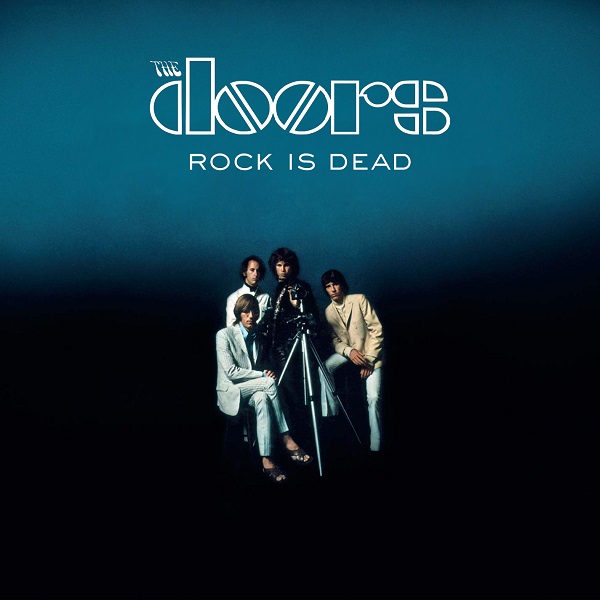
The Doors - Rock is Dead


The Doors - Rock is Dead

(soniclovenoize reimagining)

Side A:

  1. Touch Me
  2. Who Scared You
  3. Shaman’s Blues
  4. Whiskey, Mystics & Men
  5. Queen of The Highway
  6. Do It

Side B:

  1. Rock is Dead

Hello there, and welcome to the new Patreon-based incarnation of Albums That Never Were!  The very first reconstruction to be featured in this new format is a reimagining of The Doors fourth album, here called Rock is Dead.  This reimagining attempts to restructure the band’s otherwise dismal 1969 album The Soft Parade into a release more in-line with the band’s established Morrison-led, psychedelic-rock sound, rather than an over-produced hodge-podge of unfinished material.  Side A features what is essentially the best material from The Soft Parade sessions, and are all “band only mixes” that exclude producer Paul Rothchild’s misguided brass and string overdubs. The entirety of Side B consists of my own, custom made 20-minute edit of The Door’s infamous hour-long jam “Rock is Dead”, intended as this album’s epic (as “The End”, “When The Music’s Over” and “Celebration of The Lizard” were for the previous three albums).

By 1969, the creative minds behind The Doors were running on empty.  After two groundbreaking 1967 albums The Doors and Strange Days and a third entry with 1968’s Waiting For The Sun (which was reconstructed on this blog as Celebration of the Lizard), The Doors were simply out of original material to create a fourth album.  With the daunting task of writing completely new material in the studio for a market hungry for new Doors material, the band relied heavily on contributions from guitarist Robby Kreiger; although he had written the band’s break-through hit “Light My Fire”, the soul of the band lied within vocalist Jim Morrison’s words, coupled with the collective strength of the rest of the band’s idiosyncratic musicality.  Unfortunately, Morrison was completely disillusioned from “The Rock Star Life” and was more interested in his two other passions: alcohol and poetry.   Left to herd the cats was producer Paul Rothchild, tasked to coax out an album’s worth of material from a band adrift.  Additionally, Rothchild made the erroneous blunder to overdub lush horns and strings onto the new Doors material, to follow the symphonic rock trend paved by his perceived main competition, The Beatles.

The album sessions began in July 1968, directly after the completion of Waiting For The Sun, with the recording of Morrison’s “Wild Child” and Krieger’s “Wishful Sinful”, neither of which contained the excitement of the band’s previous work.  Also tracked was a demo of a song which would be revisited years later: “Roadhouse Blues”, featuring keyboardist Ray Manzerek on lead vocals!  The Doors then embarked on an infamous European tour with Jefferson Airplane (which included Morrison’s drunken tryst with Grace Slick, and Ray’s first foray into replacing the our-of-commission frontman of the band), returning to work on the album in November.

The first two new songs to be tracked at the band’s new Elektra Studios that Fall would be a pair of Krieger originals with decidedly pop overtones: “Touch Me” and “Tell All The People.”  While the former has potential, the later was a soupy ballad to flower power.  In contrast, Jim and Robby offered a pair of co-written rockers: “Do It” and “Who Scared You”.  Finally, Jim offered up his own material in “Shaman’s Blues”, “Queen of The Highway” and “Whiskey, Mystics and Men”; the latter two would be scrapped and later re-recorded for Morrison Hotel.  The following week, Rothschild overdubbed horns to “Touch Me”, “Tell All The People”, “Wishful Sinful” and “Who Scared You”, and strings to “Touch Me” and “Wishful Sinful.”

The excruciating recording process had yet to yield an albums-worth of material, so the band returned after Christmas to record Robby’s own bizarre tribute to Ottis Redding, “Runnin’ Blue”, which received hoedown overdubs after the New Year.  After attempting and then abandoning a “jazzier” remake version of “Queen of the Highway” (which was abandoned as well), the quartet proceeded to record a number of musical fragments, culled from the final bits of poetry from Morrison’s lyric book which had birthed so many Doors classics only three years earlier.  The resulting scatterbrained medley “The Soft Parade” would last nearly nine minutes in length, yet lacked the soul of The Doors’ previous epic album songs.

But the real curiosity of the sessions occurred on February 25th, 1969: an hour-long in-studio jam that has since been dubbed “Rock is Dead.”  Its infamy has only grown over the years, spawning an intense mythos often concerning an intentional overview of the entire history of Rock n Roll, The Doors self-awareness of their place in it all, and Jim’s alleged conclusion that Rock was dead.  Judging by what can actually be heard on the tape, it sounds more like a drunk Doors jamming to oldies for an hour, with varying levels of success.  Regardless, its legendary status in The Doors vault was secured as various edits and mixes of “Rock is Dead” scouted the bootleg market for years.

With teeth finally extracted, The Soft Parade was released in July 1969, with “Touch Me” hitting number three on the Billboard charts.  Whilst admittedly a great Doors song, this listener could not help but wonder “What would it have sounded like without the schlocky Las Vegas horns?”  Fifty years later, The Doors issued “band only” mixes of most of the overproduced Soft Parade songs–as well as the entirely of the “Rock is Dead” jam session–allowing fans to re-imagine the album into a more “traditional"-sounding Doors album, as well as a more Jim Morrison-centered one.

Side A of this Doors reimagining begins with the aforementioned band-only mix of “Touch Me”, which loses none of its bombast that some had presumed without the horn section.  Following is the band-only remix of “Who Scared You”, originally released with horns as the b-side to “Wishful Sinful”, followed by the original mix of “Shaman’s Blues.”  At this point, we shift to two Jim Morrison-led outtakes from The Soft Parade sessions that could have been finished and greatly improved the original album: “Whiskey, Mystics and Men” (here the original November 1968 outtake, rather than the re-recording which featured American Prayer-era band overdubs) adds the darkness and mysticism lacking on The Soft Parade; following is my own edit of the original November 1968 “Queen of The Highway” from the Morrison Hotel boxset (yes, the “Get naked and fuck!” version!) that effectively creates a cohesive version from four different sections and takes.  Side A ends with a bang with the original album mix of “Do It.”

Since Rock is Dead is meant to be closer in sound and tone to the debut, Strange Days and Celebration of The Lizard, the only way this album could be presented would be with an edit of “Rock is Dead” occupying the entire Side B of this reimagined album!  I have removed all the bum notes and false starts, the outhouse Robby solos and unnecessarily repeated musical sections to create a more cohesive performance.  This “Rock is Dead” ends up sounding like a more refined live improvisation, much like what one would hear at a Doors concert and something that was never really captured in the studio.  It might lack real meat, but it is honest; if you have never bothered listening to this piece, my edit is probably your best bet.  Some might construe it as rough and slightly meandering, but is that any worse than what we got on The Soft Parade?


Sources used:

Morrison Hotel (50th Anniversary boxset)

The Soft Parade (50th Anniversary boxset)


LISTEN TO IT AT OUR PATREON SITE

http://patreon.com/AlbumsThatNeverWere


Saturday, May 1, 2021

Captain Beefheart and His Magic Band - It Comes To You in a Plain Brown Wrapper (UPGRADE)


Captain Beefheart and His Magic Band – 

It Comes To You In a Plain Brown Wrapper

(soniclovenoize reconstruction)

MAY 2021 UPGRADE


Disc 1 – Captain Beefheart and His Magic Band
Side A:
1. Safe as Milk
2. Big Black Baby Shoes
3. Moody Liz
4. Trust Us

Side B:
5. On Tomorrow
6. Dirty Blue Gene
7. Beatle Bones n’ Smokin’ Stones
8. Gimme Dat Harp Boy
9. Kandy Korn


Disc 2 – The Twenty-Fifth Century Quakers
Side A:
1. Mirror Man
2. 25th Century Quakers

Side B:
3. Korn Ring Finger
4. Tarotplane


Happy May Day! To celebrate, here’s a long-overdue upgrade to one of my favorite albums that never were. This is a reconstruction of the unreleased 1968 double-album It Comes to You in a Plain Brown Wrapper by Captain Beefheart and His Magic Band. Originally scrapped with half of the material re-recorded and infamously “psychedelicized” for the album Strictly Personal with the other half released as 1972’s Mirror Man, this reconstruction attempts to cull all the originally intended material for the double album that was supposed to be their sophomore release, more successfully bridging the gap between 1967’s Safe As Milk and 1969’s Trout Mask Replica. This upgraded version attempts to follow drummer John “Drumbo” French’s recollections of what Captain Beefheart actually intended with the album, organizing the composed material on Disc One and the improvised material on Disc Two. I have created unique edits of the improvised material in order to fit on a theoretical vinyl record, and have edited the composed songs in Disc One as per French’s notes on how they should have ended. Additionally, I have synced the isolated vocal from the Strictly Personal version of “On Tomorrow” with the instrumental Plain Brown Wrapper version, creating a 'finished' recording.

After a prominent rise of notoriety upon the release of Captain Beefheart & His Magic Band’s psychedelic-blues debut Safe As Milk in 1967, the group stood at a crossroads of how to proceed: continue being a cutting edge cult act or expanding their horizons? After a disastrous warm-up performance for their scheduled 1967 Monterey Pop Festival, it seemed that breakthrough success would elude the riotous bunch. To make matters worse, Don Van Vliet’s band had been damaged by lineup changes due to members who had had enough of The Captain’s drug hallucinations, erratic behavior and alleged emotional abuse. Prodigal guitarist Ry Cooder vacated to be replaced briefly by Gerry McGee, who was in turn replaced by Jeff Cotton.

Despite the troubled waters, Vliet reunited with a Magic Band that consisted of Cotton, Alex St. Clair Snouffer, Jerry Handley and John French in the November of 1967 to record their follow-up to Safe As Milk at TTG Studios in Los Angels. The band had spent months writing and rehearsing new material, which they tackled in the studio: “Safe as Milk”, “Trust Us”, “On Tomorrow”, “Beatle Bones n’ Smokin’ Stones”, “Gimme Dat Harp Boy”, “Kandy Korn”, “Big Black Baby Shoes”, “Flower Pot”, “Dirty Blue Gene” and “Moody Liz”. The new material was more intricate and abstract as compared to the Blues-based Safe as Milk, yet often retaining a melodic sensibility for the possibility of mainstream airplay; “Trust Us” was specifically earmarked for the lead single for the new record.

But expectations were even higher than this impressive collection of songs, as Vliet intended their sophomore album to be a conceptual double-record: The first disc would contain the aforementioned “composed” works, and be credited to Captain Beefheart and His Magic Band; a second disc of improvisational jams would constitute the second disc, credited to their alter-egos the Twenty-Fifth Century Quakers, who were essentially “opening” for Captain Beefheart and The Magic Band. The album was to be called It Comes To You In A Plain Brown Wrapper, in reference to an ambiguous parcel containing either narcotics, drug paraphernalia or possibly pornography. The cover art was to feature exactly that as well, a plain brown wrapper marked ‘strictly personal’, with both records addressed from one band to the other. There was even a photo shoot with the band dressed as Quakers!

Producer Robert Krasnow ran tape as the Captain and His Magic Band soldered through a number of live improvisations-- “Taroplane”, “25th Century Quaker”, “Mirror Man” and “Korn Ring Finger” – which Drumbo French thought were disorganized due to Vliet being unable to conduct the unprepared band properly, as he was contained in a vocal booth. After tracking more than a double album’s worth of material in total, the sessions were paused for a European tour, leaving only six of the ten composed songs with vocals. The band never returned to the TTG Session recordings, forever leaving these tracks unfinished. No reason was ever given for the session’s halt, but it has been suggested that their label Buddha Records had pulled the plug out of disinterest. Interestingly enough, due to Buddha Records misfiling of the band’s contract, Captain Beefheart and company were free to sign to a different label by the Spring of 1968. The very next day, Krasnow and the band entered Sunset Sound Studios to rerecord a single-LP version of the album on Krasnow’s own Blue Thump label.

Recorded in April and May of 1968, Don & his crew recut the more ”commercial” tracks from the November 1967 sessions at a much more abbreviated length: “Safe as Milk”, “Trust Us”, “Mirror Man” (cut from the original 15 minutes down to 5!), “On Tomorrow”, “Beatle Bones ‘n; Smokin’ Stones, “Gimme Dat Harp Boy” and “Kandy Korn”, as well as a new improvisation called "Ah Feel Like Ahcid." In a move that angered Beefheart fans for ages, Krasnow allegedly took the liberty himself to overdub numerous faux-psychedelic effects onto the newly-recorded album, even completely burying the mixes under unlistenable phasing. The resulting released album—Strictly Personal—was a commercial disaster and The Captain disowned the album, claiming the effects were added without his permission. Some speculate that was untrue and Vliet had given his approval only to later turn on the album after its failure. Either way, this folly of questionable truth is just simply a part of the Captain Beefheart mythos-- as was everything else!

After the critical success of the seminal experimental and Frank Zappa-produced rock album Trout Mask Replica (not to mention its respectable follow-up Lick My Decals Off Baby), Buddha Records wished to capitalize on Captain Beefheart’s renewed cult status and artistic credibility. Going back to the original November 1967 Plain Brown Wrapper tapes, they compiled a single-disc of material, primarily focusing on the extended live improvisations. 1971’s Mirror Man included “Tarotplane”, “Kandy Korn”, “25th Century Quaker” and “Mirror Man” and showed the world (or at least the few who were listening) what Strictly Personal was supposed to sound like, to some extent. But wasn't without its own short comings: not only was it merely half of the original Plain Brown Wrapper album, but it featured anachronistic cover art, improper musician credits and Buddha falsely claimed the album was recorded in one night in 1965!

Beyond the Mirror Man LP, the TTG Sessions remained unheard, although “Big Black Baby Shoes” was rerecorded as “Ice Rose” for 1978’s Shiny Beast and “Dirty Blue Gene” was rerecorded for Doc At The Radar Station in 1980. Years passed before fans were able to piece together the actual Plain Brown Wrapper album, beginning with questionably-legal British import I May Be Hungry But I Ain’t Weird in 1992. Suffering from the same fate as other early Captain Beefheart CD reissues of poor mastering and use of inferior mastertapes, it wasn’t until 1999 when Buddha Records released The Mirror Man Sessions, essentially a properly-mastered Mirror Man with five outtakes from the Plain Brown Wrapper sessions included as bonus tracks; seven more TTG outtakes were included as bonus tracks on the 1999 remaster of Safe As Milk. Finally, Sundazed Records collected all the non-Mirror Man outtakes and one more additional track in their own vinyl-only 2008 reconstruction of It Comes To You in a Plain Brown Wrapper (which made no attempt to literally reconstruct the lost album).

While all the pieces are now available to recreate It Comes to You in a Plain Brown Wrapper, we still have the task to wrap it all up as one. While my previous reconstruction featured a mix of the composed and improvised selections evenly spread across the four theoretical LP sides, here we will follow what drummer John French has said he believed the album would have been structured, according to conversations he’d had with The Captain himself! This will include making my own unique edits of the four improvisational pieces (“Mirror Man”, “25th Century Quaker”, “Korn Ring Finger” and “Tarotplane”) so that they will fit on a 40-minute vinyl record. The remaining songs will be sequenced as French suggested (beginning with “Safe as Milk" and ending with “Kandy Korn”), using the songs’ officially-released versions as a template of when the tracks should end (as most of the TTG Sessions simply did not have proper endings), as well as French’s own comments about when songs should have ended. Finally, Side B will be structured to emulate the Side B of Strictly Personal, just for fun!

For the Captain Beefheart and His Magic Band disc, side A begins with Take 5 of “Safe as Milk”, a bonus track found on the 1999 Safe as Milk reissue, faded out just before the 4-minute mark; French had said he believed Vliet wanted to begin the album with “Safe as Milk”, to make a sort of continuity from the previous album. Following is “Big Black Baby Shoes” from the 1999 Safe as Milk reissue, edited to match the Shiny Beast rerecording. Next is “Moody Liz” from The Mirror Man Sessions, with the side closing with Take 9 of “Trust Us” from the Safe as Milk reissue, but faded out after the drum crescendo, as suggested by French. Side B attempts to replicate a non-psychedelicized Strictly Personal, as it opens with “On Tomorrow” but with the isolated vocals from the Strictly Personal recording synced to the TTG version from the Safe as Milk remaster. Next is “Dirty Blue Gene” again from the Safe as Milk reissue, followed by “Beatle Bones ‘n’ Smokin’ Stones”, “Gimme Dat Harp Boy” and “Kandy Korn”, all taken from The Mirror Man Sessions.

For the Twenty-Fifth Century Quaker disc, Side C begins with “Mirror Man” from The Mirror Man Sessions, edited down from 15:46 to an even 13:00. This is followed by “25th Century Quaker” also from The Mirror Man Sessions, edited down from 9:50 to 7:36. Side D opens with the hypnotic “Korn Ring Finger”, presented in it’s full 6:47 length as heard on the Safe as Milk remaster. The album closes with the epic “Tarotplane” from The Mirror Man Sessions, edited down from 19:08 to a reasonable 14:04.

 
Sources used:
The Mirror Man Sessions (1999 Buddha Records CD remaster)
Safe as Milk (1999 Buddha Records CD remaster)
Strictly Personal (1994 Liberty Records CD remaster)


flac --> wav --> editing in SONAR Pro and Goldwave --> flac encoding via TLH lv8
* md5 files, track notes and artwork included


Wednesday, March 11, 2020

Pink Floyd - Zabriskie Point Soundtrack (UPGRADE)


Pink Floyd – Soundtrack To The Film ‘Zabriskie Point‘

(soniclovenoize reconstruction)

March 2020 UPGRADE


Side A:

1.  Heart Beat, Pig Meat

2.  Country Song

3.  The Violent Sequence

4.  Fingal’s Cave

5.  Crumbling Land

6.  Love Scene


Side B:

7.  Alan’s Blues

8.  Oenone

9.  Rain In The Country

10.  Come In Number 51, Your Time Is Up


Long time/no post!  Here is a long-threatened update to one of my favorite reconstructions, the unreleased 1970 Pink Floyd soundtrack to the film Zabriskie Point.  A specific cycle of music written for the film and allegedly intended as the band's own release, the film’s director Michelangelo Antonioni scrapped most of Pink Floyd’s work in favor of a collection of songs also featuring Grateful Dead, Kaleidoscope and The Youngbloods.  With only three of the band’s intended songs making the cut, the rest trickled out over the years on bootlegs, remaster bonus discs and box sets.  This reconstruction attempts to collect the final takes of the primary compositions for the film and presents it in a cohesive, all-Pink Floyd collection, akin to More and Obscured By Clouds.  Many tracks feature my own unique edits and have all been volume adjusted for coherency. 


Upgrades to this March 2020 edition are:

  • “Rain in the Country” upgraded source from The Early Years
  • New edit of “Fingal’s Cave” from upgraded source, The Early Years
  • New edits of “Oenone” and “Alan’s Blues”
  • Addition of “The Violent Sequence” and “Love Scene”


1969 was a hit and miss year for Pink Floyd.  Obviously searching for a signature sound beyond Syd Barrett’s psychedelic pop, the band spent the year touring and composing conceptual sound experiments, including the live presentation The Man and The Journey (which was also reconstructed on this blog).  Some of this music appeared on the soundtrack to the film More, a collection of pieces Pink Floyd recorded specifically for the Barbet Schroeder film, released in August.  A few other Man and The Journey tracks appeared on the band’s own release Ummagumma in November, a double LP that featured solo studio recordings from each individual member of Pink Floyd and a live disc which featured fantastic recordings from that spring, including a dynamic version of their 1968 b-side, “Careful With That Axe, Eugene”. 


It was that specific b-side which spurred on Pink Floyd’s creation of their next studio soundtrack project, recorded the very month of Ummagumma’s release.  Director Michelangelo Antonioni was so moved by “Careful With That Axe, Eugene”, he requested not only for Pink Floyd to record a new version of it for his upcoming film Zabriskie Point, but to score it’s entirety!  The band gathered into International Recording Studio in Roma in November 1969 to compose and record music specifically for the film, with more work in December at Abbey Road.   In the end, Pink Floyd recorded original music for seven different scenes throughout those two months: 


The opening credits featured an experimental piece called “Heart Beat, Pig Meat”, which was sometimes performed within The Man and The Journey as "Doing It!" throughout 1969.  Driven by a heartbeat-like loop of a microphone tap, Richard Wright’s meandering organ and dialog sound samples from the film and elsewhere, the song opened the officially released soundtrack.  


Pink Floyd recorded several variations of a song called “Country Song”, meant for the scene in which protagonist Daria is driving and looking at a map.  While it was one of the only two songs of the cycle with actual lyrics, they also recorded several shorter, instrumental versions, including “Auto Scene 2”, “Auto Scene 3” and “Looking At Map”. Despite being a solid song that could have been a highlight on Atom Heart Mother, "Country Song" didn't make the cut and Antonioni instead used “Brother Mary” by Kaleidoscope for the scene.  


Wright composed a beautiful piano piece for the riot scene, which the band called “The Violent Sequence”.  Antonioni again decided not to use it, but the band rewrote it into the magnificent “Us and Them” on Darkside of The Moon.  


For the scene in which the airplane takes off and flies, Pink Floyd composed several heavy rock pieces, including “Take Off 1” and “Take Off 2”.  A third variation of “Take Off” was dubbed “Fingal’s Cave” by the band, and was considered the master for their own soundtrack album, had it been released.  Antonioni did not use any of these, and instead used an edit of Grateful Dead’s “Dark Star” from Live/Dead.  


A second ‘driving on the highway’ scene featured variations of a rollicking folkish song called “Crumbling Land”, the second to contain actual lyrics and was eventually featured in both the film and official soundtrack.  A shorter version called “On The Highway” was also recorded.  


The love scene between Daria and Mark proved to be more difficult to provide, as Pink Floyd recorded several vastly different pieces of music for the love scene.  The band initially tracked a spacey, psychedelic piece featuring Wright’s farfisa organ and David Gilmour’s delayed guitar effects with overdubbed vibraphone, not dissimilar to More’s “Quicksilver”.  After recording three different versions of this arrangement—with the third featuring overdubbed erotic sound effects and called “Oenone”, intended as the master for Pink Floyd’s own soundtrack album—Antonioni suggested a different musical approach.  “Love Scene 4” featured a majestic Wright piano solo, with an overdubbed vibraphone.  This too was rejected, and Pink Floyd simplified it to “Love Scene 5”, a double-tracked vibraphone piece, which was also dismissed.  A complete rethink produced “Love Scene 6”, a slow blues jam, renamed “Alan’s Blues” and meant for the band’s own soundtrack album.  That two was rejected, and Pink Floyd attempted one last arrangement for Antonioni’s love scene: a long, space-folk instrumental (reminiscent of “The Narrow Way, Part 1” and “Baby Blue Shuffle in D Major”) called “Love Scene 7”, which was also called “Rain In The Country” for the band’s own intended soundtrack album.  All five of these variations of the love scene were rejected and Antonioni used a multitracked solo guitar piece by Jerry Garcia instead.  


Pink Floyd’s final contribution was used in both the film and official soundtrack: “Come In Number 51, Your Time Is Up”, the remake of “Careful With That Axe Eugene” featured in the explosion scene.  The band also recorded an alternate take called “Explosion” in a major key.


Ultimately, only “Heart Beat, Pig Meat”, “Crumbling Land” and “Come In Number 51, Your Time Is Up” was used and featured on the soundtrack.  Pink Floyd allegedly compiled their own eight-song, 40-minute master of their original music for a possible release, but it never emerged.  The film’s musical advisor Don Hall played several selections from that master on the radio in late 1969; a recording of that broadcast was used to make the legendary Omayyad bootleg, which gave Pink Floyd collectors a sample of some of the Zabriskie Point music left on the cutting room floor.  “Country Song”, “Love Scene 4”, “Alan’s Blues” and “Rain in the Country” all appeared on the bonus disc of the 1997 remaster of the Zabriskie Point soundtrack, with an additional 70 minutes of studio outtakes from the sessions appearing on the bootleg A Journey Through Time and Space, possibly dubbed on the sly from the mastertapes during the Zabriskie Point remastering process.  Finally, 47 minutes of Zabriskie Point recordings were featured on The Early Years: Devi/ation box set in 2016. 


My reconstruction of the Soundtrack to the Film ‘Zabriskie Point’ collects the master takes of each song meant for each of the seven scenes, additionally using three variants of the love scene, presented in film order.  My intent is to present this reconstruction as a sister album to Pink Floyd’s More, so some tracks have been edited for the sake of release-appropriateness.  Each side is approximately 20 minutes and this reconstruction should be able to slip into Pink Floyd’s official cannon with no musical overlap. 


Side A begins with “Heart Beat, Pig Meat” and “Country Song”, both taken from the 1997 Zabriskie Point remaster.  This is followed by “The Violent Sequence” from The Early Years; note this is the shorter version recorded during the actual Zabriskie Point sessions, as opposed to the longer Richard Wright demo recorded just before Dark Side of The Moon.  Next is my own unique edit of “Fingal’s Cave”, in which “Take Off 1” is hard edited onto the end of “Aeroplane” to make a more complete listening experience, both from The Early Years.  Next is “Crumbling Land”, taken from Zabriskie Point but pitchshifted to be in the correct key.  Side A closes with what I am calling “Love Scene”, which is my own unique edit of the piano/vibes mix of “Love Scene 4” from A Journey Through Space and Time, cutting the over-six minute track down to a manageable three minutes! 


Side A begins with my own edit of “Alan’s Blues” from the 1997 remaster of Zabriskie Point; here I have edited out Gilmour’s first (and embarrassingly clumsy) guitar solo, cutting an entire minute out of its run-time.  Following is “Oenone”, the master take of Pink Floyd’s spacey version of the love scene.  Although their final master is as heard on the Omayyad bootleg, I am instead using the “Full Mix” as found on A Journey Through Time and Space bootleg, as it has superior sound-quality and added sound elements.  I have faded the song out 3:45, excluding the band’s ridiculous erotic noises, as I felt it disrupted the feel and flow of the album as a whole.  Closing the album out is “Rain in the Country” and “Come in Number 51, Your Time is Up”, both from the Zabriskie Point remaster. 


While certainly not the greatest Pink Floyd album—and one can understand why it was never released—the Soundtrack To The Film 'Zabriskie Point' seems to stay close to my heart and holds a lot of air time on my music player.  The album showcases a series of snapshots of Pink Floyd genre-hopping, including individual songs that each play upon their diverse range of strengths and influences: experimental found-sound collage; heavy psychedelic rock; electric blues; atmospheric psychedelia; acoustic folk.  There is a bit of everything thrown in the mix, yet the album works as a whole, more so than their previous and equally-diverse soundtrack album for the film More.  Although largely instrumental, the two song-based gems “Country Song” and “Crumbling Land” are stand-out tracks that could rank as high as any of the Pink Floyd singles from the 1960s.  Soundtrack To The Film 'Zabriskie Point' has something for everyone and shows their essential continuity in between Ummagumma and Atom Heart Mother.


Sources used:
Zabriskie Point Soundtrack (1997 TCM Records remaster)
A Journey Through Time and Space (2000 Scorpio Records bootleg)
The Early Years 1970: Devi/ation (2017 Pink Floyd Records)


flac --> wav --> editing in SONAR Pro and Goldwave --> flac encoding via TLH lv8
*md5, artwork and tracknotes included

Thursday, August 7, 2014

Captain Beefheart - It Comes To You in a Plain Brown Wrapper


Captain Beefheart & His Magic Band –
It Comes To You in a Plain Brown Wrapper
(soniclovenoize reconstruction)


Side A:
1.  Trust Us
2.  Mirror Man

Side B:
3.  Korn Ring Finger
4.  25th Century Quaker
5.  Safe As Milk

Side C:
6.  Moody Liz
7.  Tarotplane

Side D:
8.  On Tomorrow
9.  Beatle Bones n’ Smokin’ Stones
10.  Gimme Dat Harp Boy
11.  Kandy Korn


This was a long-overlooked follower-request from a few years ago and I was recently reminded to do it!  This is a reconstruction of the unreleased 1968 double-album It Comes to You in a Plain Brown Wrapper by Captain Beefheart & His Magic Band.  Originally scrapped with half of the material re-recorded and infamously “psychedelicized” for the album Strictly Personal and the other half released as 1972’s Mirror Man, this reconstruction attempts to cull all the originally intended material for the double album that was supposed to be their sophomore release, more successfully bridging the gap between 1967’s Safe As Milk and 1969’s Trout Mask Replica.  Some tracks have been crossfaded to make a continuous side of music (notably Side D) and the most pristine sources are used for the best soundquality, including a vinyl rip of an original pressing of Mirror Man. 
 
After a prominent rise of notoriety upon the release of Captain Beefheart & His Magic Band’s psychedelic-blues debut Safe As Milk in 1967, the group stood at a crossroads of how to proceed: continue being a cutting edge cult act or expanding their horizons?  After a disastrous warm-up performance for their scheduled 1967 Monterey Pop Festival, it seemed that breakthrough success would elude the riotous bunch.   To make matters worse, Don Van Vliet’s band had been damaged by lineup changes due to members who had had enough of The Captain’s drug hallucinations and erratic behavior.  Prodigal guitarist Ry Cooder vacated to be replaced briefly by Gerry McGee, who was in turn replaced by Jeff Cotton. 

Despite the troubled waters, Don reunited with a Magic Band that consisted of Cotton, Alex St. Clair Snouffer, Jerry Handley and John French in the fall of 1967 to record their follow-up to Safe As Milk.  The album was planned to be a double album and was to follow the contemporary fad of extended improvisational jams, as well as featuring a more “live” feel as compared to the first record.  The album was to be called It Comes To You In A Plain Brown Wrapper, in reference to an ambiguous parcel containing either narcotics, drug paraphernalia or possibly pornography.  The cover art was to feature exactly that as well, a plain brown wrapper marked ‘strictly personal’! 

This parcel was never delivered however, as the recording sessions came to a halt.  No reason was ever given, but it has been suggested that their label Buddha Records had pulled the plug out of disinterest.  A consolation was offered by the producer of the Plain Brown Wrapper sessions, Bob Krasnow, who convinced the band to rerecord some of the material and release it on his label Blue Thumb.  Recorded in April and May of 1968, Don & his crew recut the more ”commercial” tracks from the Fall 1967 sessions at a much more abbreviated length (“Mirror Man” was cut from the original 15 minutes down to 5!).  In a move that angered Beefheart fans for ages, Krasnow took the liberty himself (allegedly) to overdub numerous faux-psychedelic effects onto the newly-recorded album, even completely burying the mixes under unlistenable phasing.  The released album—Strictly Personal—was a commercial disaster and The Captain disowned the album, claiming the effects were added without his permission.  Some speculate that was untrue and Don had given his approval only to later turn on the album after its failure.  Either way, this folly of questionable truth is just simply a part of the Captain Beefheart mythos, as was everything else. 

After the critical success of the seminal experimental and Frank Zappa-produced rock album Trout Mask Replica (not to mention its respectable follow-up Lick My Decals Off Baby), Buddha Records wished to capitalize on Captain Beefheart’s renewed cult status and artistic credibility.  Going back to the original fall 1967 Plain Brown Wrapper tapes, they compiled a single-disc of material, primarily focusing on the extended live improvisations.  1971’s Mirror Man showed the world (or at least the few who were listening) what Strictly Personal was supposed to sound like, to some extent.  But it was not without its own short comings: not only was it merely half of the original Plain Brown Wrapper album, but it featured anachronistic cover art, improper musician credits and Buddha falsely claimed the album was recorded in one night in 1965! 

Years passed before fans were able to piece together the Plain Brown Wrapper album, beginning with questionably-legal British import I May Be Hungry But I Ain’t Weird in 1992.  Suffering from the same fate as other early Captain Beefheart CD reissues of poor mastering and use of inferior mastertapes, it wasn’t until 1999 when Buddha Records released The Mirror Man Sessions, essentially a properly-mastered Mirror Man with five outtakes from the Plain Brown Wrapper sessions included as bonus tracks.  Seven more outtakes (presumably the rest of the listenable material) were included as bonus tracks on their remaster of Safe As Milk.  Finally, Sundazed Records collected all the non-Mirror Man outtakes and one more additional track in their own vinyl-only 2008 reconstruction of It Comes To You in a Plain Brown Wrapper (which made no attempt to literally reconstruct the lost album, unlike my own reconstruction).

While all the pieces are now available to recreate It Comes to You in a Plain Brown Wrapper, we still have the task to wrap it all up as one.  The layout of my reconstruction was rather simple: each of the four sides would feature one of the lengthy live jam sessions, with one whole side following Side B of Strictly Personal as close as possible (giving one an alternate and more authentic take on the album).  I also used a pristine needledrop vinyl rip of Mirror Man by Euripides for those tracks, as it features the album’s original EQ and mastering parameters that has since been lost, deeper bass and crisper highs.  It is of note that the Sundazed vinyl utilized the same mastering as the 1999 Buddha remasters, so it was not used here as source material.  I also chose to exclude the instrumental tracks that Captain Beefheart had never gotten around to recording vocals for (“Big Black Baby Shoes”, “Flower Pot” and “Dirty Gene”), thus making a more finished-sounding album (although the instrumental “On Tomorrow” was used to mimic the tracklist for Strictly Personal).  The end result is eleven tracks that span two 45-minute discs and offer a purer Captain Beefheart album than Strictly Personal, with this effectively replacing it. 

Side A of my reconstruction begins with take 12 of “Trust Us” from the Safe As Milk remaster, selected over take 6 as take 12 featured vocal overdubs, suggesting it was the master take.  This is followed by the epic “Mirror Man” from Euripides’ vinyl rip of the album.  Side B begins with the reserved Delta Blues “Korn Ring Finger” from the Safe As Milk remaster, followed by “25th Century Quaker” from Euripides’ Mirror Man vinyl rip, concluding with take 12 of ”Safe as Milk” from The Mirror Man Sessions, again chosen over take 5 because of its vocal overdubs.

The second disc begins with the decidingly upbeat take 8 of “Moody Liz” from The Mirror Man Sessions (chosen over the overdub-less take 16 from Sundazed’s Plain Brown Wrapper) and the rest of the side C belongs to “Tarotplane” from Mirror Man.  The final side of the album attempts to offer an alternate, unadorned version of side B of Strictly Personal, beginning with the instrumental “On Tomorrow” from the Safe As Milk remaster, which is segued into “Beatle Bones n’ Smokin’ Stones” from The Mirror Man Sessions. The final descending bassline is hard edited into “Gimme Dat Harp Boy”, also from The Mirror Man Sessions.  The album concludes with possibly the most commercial track of the lot, “Kandy Korn” from Euripides’ vinyl rip of Mirror Man.  


Sources Used:
Mirror Man (Euripides vinyl rip, 1971 Buddha Records)
Safe As Milk (CD remaster, 1999 Buddha Records)
The Mirror Man Sessions (CD, 1999 Buddha Records)

flac --> wav --> editing in Goldwave --> flac encoding via TLH lv8
*md5, artwork and tracknotes included